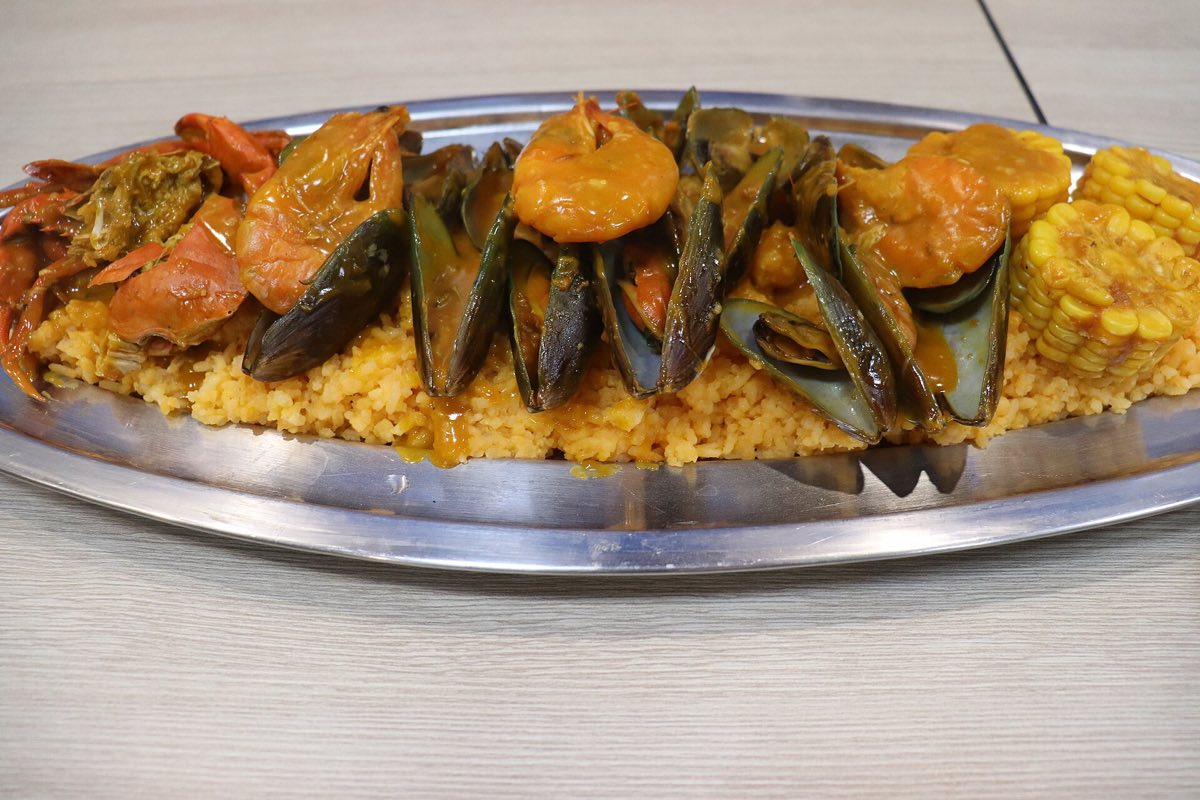
Kinabuchs: the crocodile, tamilok and beer night
This is where you eat the strange things, and it is genuinely good at it. Kinabuchs is a 200-seat open-air garden on Rizal Avenue at the Bancao-Bancao end, with big screens for sport, pool tables and a reputation as simultaneously the city's biggest restaurant and its de facto main bar. Crocodile sisig runs ₱350–600, tamilok is ₱150–300 and comes in more preparations here than anywhere else in the city, and San Miguel is ₱60–90. Budget ₱350–900 a head. It rates 4.4–4.6 across platforms and opens 16:00–17:00 — evenings only, every day.
A garden with 200 seats, pool tables and a wall of screens
Kinabuchs is not subtle and does not try to be. It is loud, open-air, cheap, and it is the closest thing this city has to a town square after dark.
It sits on Rizal Avenue at the Bancao-Bancao end — and note that at least one large aggregator prints KaLui's address, 369 Rizal Avenue, on Kinabuchs's listing. They are different restaurants at different ends of the same long road, and copying that error is how people end up standing outside a closed nipa house on a Sunday. The phone number is +63 48 434 5194.
Inside is a huge open-air garden with 200-plus seats, big screens showing whatever match matters, and pool tables. It fills for big games and empties slowly. Families are entirely fine here early; by 21:00 it is a bar with food, and the volume reflects that. This doubles as the answer to where to drink in Puerto Princesa, because on most nights it is the busiest room in the city.
The hours are the one unresolved fact. Sources put opening between 16:00 and 17:00 and closing between 23:00 and 01:00, and whether it still runs to 01:00 post-pandemic is unverified. What is not in doubt is that it does not serve lunch. If you want a midday meal on Rizal Avenue, that is a chaolong house or KaLui at 11:00.
The exotic-food checklist, priced
One table, one visit, and you have eaten everything Puerto Princesa is known for that is not a fish. Order the crocodile and the tamilok to share — both are richer than they look.
| Order | What it is | Price | Verdict |
|---|---|---|---|
| Crocodile sisig the headline dish and the reason most people come | Sizzling chopped crocodile from the government farm — firmer than chicken, somewhere between chicken and pork | ₱350–600 | WORTH IT |
| Tamilok kinilaw the widest range of preparations in the city | Mangrove shipworm — a mollusc, not a worm — cured raw in vinegar and calamansi | ₱150–300 | WORTH IT |
| Tamilok, deep-fried | The gateway version. Fried, salted, and much easier than the raw plate | ₱150–300 | WORTH IT |
| Crispy pata | Deep-fried pork knuckle that reviewers here specifically call not greasy, which is the whole test | ₱350–550 | WORTH IT |
| Grilled pampano | Whole pomfret off the grill — the safe order and a good one | ₱250–450 | WORTH IT |
| Lato | Sea grapes with salt and vinegar. Order it to cut through everything else on this list | ₱50–100 | WORTH IT |
| Fried shrimp | Straightforward, generous, and the thing to put in front of anyone who is not playing along | ₱250–450 | WORTH IT |
| Crocodile adobo or steak | The other two croc preparations. Sisig is the better introduction to the meat | ₱350–600 | DEPENDS |
| Goat stew | Kaldereta-style. Divisive, strongly flavoured, and not the dish to spend your one exotic order on | ₱300–500 | DEPENDS |
| Halo-halo | Locally famous, and the correct end to a plate of crocodile | ₱80–150 | WORTH IT |
| San Miguel or Red Horse | The reason half the room is here. Cocktails, if you want them, run ₱150–300 | ₱60–90 | WORTH IT |
Two people ordering crocodile sisig, a tamilok plate, lato and four beers land at roughly ₱1,200 (~$21) total. That is the full exotic-food night in this city, done.
The practical bit
Farmed, government-run, and the same animals tourists visit
The crocodile on the menu is farmed at the Palawan Wildlife Rescue and Conservation Center, the DENR facility established in 1987 that sits on the standard city-tour circuit.
That is the fact that decides the question for most people, in either direction. The centre breeds the critically endangered Philippine crocodile as a conservation programme and also runs saltwater crocodiles, and farmed meat from that operation is what reaches the restaurants. This is not wild-caught bushmeat and it is not an endangered animal on a plate — the full argument, including the parts that sit uncomfortably, is on the crocodile meat page and the farm page.
This site flags the judgement calls instead of making them for you: the crocodile farm is a genuine government breeding and rescue facility with small enclosures and a baby-crocodile photo op you can decline; the Butterfly Garden's Palaw'an demonstrations are paid, consensual and income-generating but read as zoo-adjacent to some visitors; and at Iwahig, inmates perform for tips. Buy the handicrafts, ask before photographing anyone, and skip anything that sits wrong with you.
If you would rather not, the rest of this menu is excellent without it. Crispy pata, grilled pampano, fried shrimp and lato make a full night for ₱350–600 a head, and the tamilok raises none of the same questions — it is a mollusc, farmed by nobody, dug out of dead mangrove wood.
Is Kinabuchs for you?
Check the hours, and pair it with the farm
No reservations, no online booking, and a closing time nobody can pin down. The useful preparation is confirming it is open and deciding how you feel about the crocodile before you are holding a menu.
Kinabuchs questions, answered
What time does Kinabuchs open?
Between 16:00 and 17:00, and it does not serve lunch. Closing is listed as anywhere from 23:00 to 01:00 depending on the source, and whether it still runs to 01:00 after the pandemic is unverified. Plan to arrive between 18:00 and 20:00.
Where can I try crocodile in Puerto Princesa?
Kinabuchs is the spot. Crocodile sisig runs ₱350–600 and croc adobo and steak are also on the menu. The meat is farmed at the Palawan Wildlife Rescue and Conservation Center, the DENR facility established in 1987 that tourists visit on the standard city tour.
Where is the best place to eat tamilok?
Kinabuchs, which does the widest variety of tamilok preparations in the city at ₱150–300 a serving — raw as kinilaw and deep-fried. The alternative is Cacaoyan Forest Park in Sabang, which serves it at ₱100 a plate near the Underground River.
Do you need a reservation at Kinabuchs?
Not normally — there are more than 200 seats and the turnover is fast. The exception is a big televised game, when the garden fills and stays full. Arrive before 19:00 on those nights or accept a table with a poor view of the screens.
How much does dinner at Kinabuchs cost?
₱350–900 a head with beers. Crocodile sisig is ₱350–600, tamilok ₱150–300, San Miguel ₱60–90 and cocktails ₱150–300. Two people doing the full exotic-food night with four beers come to roughly ₱1,200 in total, about $21.
Is Kinabuchs good for families?
Before 20:00, yes — it is open-air, informal and fast, and there is plenty on the menu that is not crocodile. After 20:00 it becomes the city's main bar, with the volume and pool-table crowd that implies. Kitchen closes well before the bar does.
Is Kinabuchs open on Sundays?
Yes, daily. That matters because KaLui is closed on Sundays, which makes Kinabuchs the default answer for anyone whose only free evening in the city falls on one. It opens 16:00–17:00 like every other night.
Where exactly is Kinabuchs?
Rizal Avenue at the Bancao-Bancao end, phone +63 48 434 5194. Ignore any listing that gives 369 Rizal Avenue — that is KaLui's address, incorrectly copied onto Kinabuchs by at least one large aggregator, and the two are at opposite ends of a long road.